Ghana 2026: The Black Stars, Adinkra Symbols and Kente Heritage
Ghana’s FIFA World Cup 2026 kits reviewed — the Adinkra-and-Ananse white home and the Kente-inspired “Sunny Yellow” away by Puma. Design, history, ratings & where to buy.
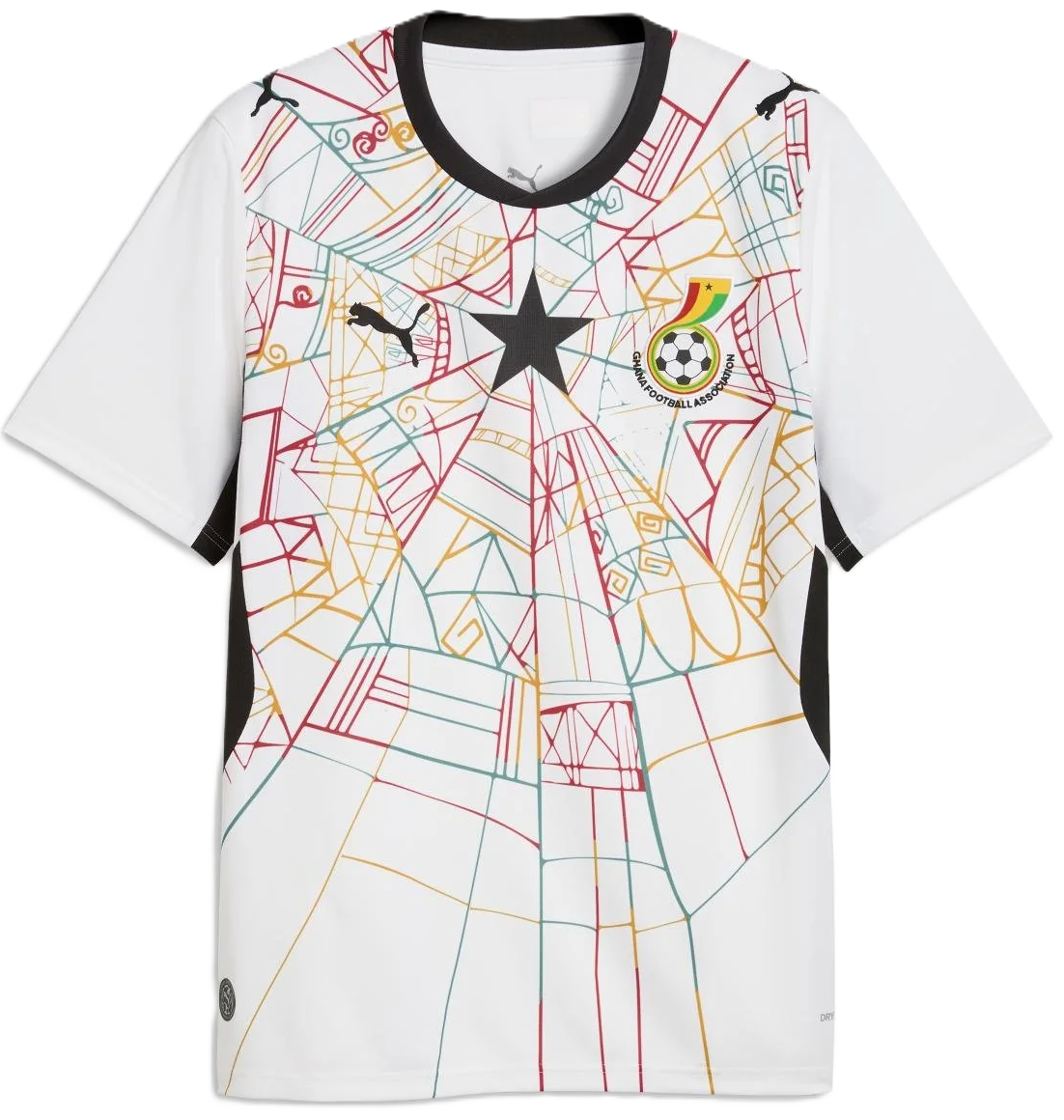 Home
Home
Clean white · Adinkra symbols · Kwaku Ananse cobweb · Black Star
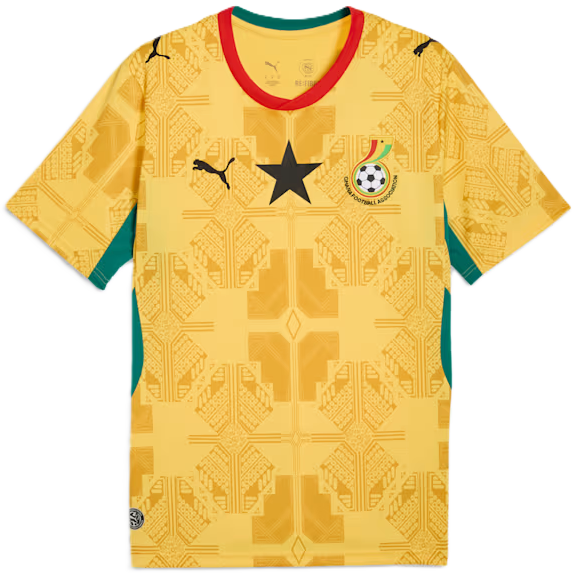 Away
Away
Sunny Yellow · Kente-influenced patterns · green panels · red collar
Original Fanorate review based on publicly reported kit details and football history; AI-assisted and fact-checked against public sources. Official Puma/GFA kit photos are copyrighted and not embedded.
Ghana

Ghana 2026 Home Replica Jersey – Men’s (FIFA store)
FIFA Official StoreBold, cultural, and unmistakably Ghanaian.
Few African teams carry the romance Ghana do. The Black Stars — four-time World Cup participants, the side that broke a continent’s heart and lifted its hopes in 2010 — return to the global stage with a fanbase whose passion is matched only by its pride in Ghanaian culture. For 2026, Puma leaned hard into that heritage, building a collection around Adinkra symbols, the Kwaku Ananse spider legend, and Kente cloth.
The home shirt weaves Adinkra and an Ananse cobweb motif into clean white; the away bursts with Kente-inspired “Sunny Yellow.” Bold, cultural, and unmistakably Ghanaian — though, as with the best concept kits, fan opinion is split.
Adinkra, Kente, and the Black Stars
The Black Stars are a symbol of African football pride, and Ghanaian culture — Adinkra, Kente, Ananse folklore — is rich material for a kit. The 2026 collection leans fully into that heritage, giving the shirt genuine cultural depth.
The kit at a glance
- Nation
- Ghana CAF
- Manufacturer
- Puma
- Home kit
- Clean white Bold geometric patterns in red, yellow and green; a black Kwaku Ananse cobweb-like motif; all-over Adinkra symbols; the Black Star at the centre
- Away kit
- "Sunny Yellow" Inspired by Accra's Makola Market; tonal Adinkra and Kente-influenced patterns; dark green side panels and sleeves; bold red collar
- Release window
- Across 2026 Check official pages for exact dates
- Design theme
- Ghanaian heritage Adinkra symbols, the Kwaku Ananse legend, and Kente cloth
(Details per public reporting from GhanaWeb, Graphic Online, Flashscore and Puma — see sources.)
Bold and cultural
The home shirt is bold and cultural: a clean white base elevated by geometric patterns in red, yellow and green, a black Kwaku Ananse cobweb motif in the middle, and all-over Adinkra symbols, with the Black Star at the centre. Rich with meaning.
The away shirt is the vibrant one — a “Sunny Yellow” base inspired by Accra’s bustling Makola Market, with tonal Adinkra and Kente-influenced patterns, dark green panels and a bold red collar. Energetic and proudly Ghanaian.
Culture as design language
The collection celebrates Ghanaian heritage — Adinkra symbols (visual proverbs), the Kwaku Ananse spider legend, and Kente cloth — with the Black Star and national colours throughout. It’s culture as design language, ambitiously executed.
Leaning fully into heritage storytelling
-
2010
2010
Ghana’s iconic run to the World Cup quarter-finals (agonisingly close to the semis) — the Black Stars’ finest hour.
-
Recent
Recent cycles
Ghana kits have increasingly drawn on Adinkra and Kente motifs; 2026’s concept is among the most overtly cultural.
-
'26
The 2026 set
The 2026 set leans fully into heritage storytelling.
The wider buzz
Football Fashion & Streetwear Appeal
The Kente “Sunny Yellow” away is a natural fashion piece — vibrant and distinctive. The Adinkra white home is a bold statement shirt. With Ghana’s passionate following across Africa, Europe and North America, both have strong crossover appeal.
Player Look & Iconic-Moment Potential
The Black Stars in cultural white — or vibrant yellow — will produce striking, colourful images, and any World Cup heroics would revive the magic of 2010. A defining moment in this kit would resonate across the continent.
Fan Reactions & Social Buzz
Expect strong engagement — love for the Adinkra/Ananse/Kente concepts from many, criticism of the execution from others. That very debate makes it shareable, and the Brooklyn launch (with Asamoah Gyan and Black Sherif) added buzz.
Manufacturer Analysis: Puma in 2026
Puma’s 2026 program leans into culturally specific storytelling, and Ghana is among the most ambitious — Adinkra, Ananse and Kente woven throughout. Bold, even divisive, but undeniably rooted in heritage.
Materials, Technology & Performance
Puma’s tournament shirts use engineered performance fabrics for hot conditions. Confirm exact fabric, fit (replica vs. authentic) and any sustainability claims on official pages before buying.
Heritage in the details
2010 quarter-finals
Ghana reached the World Cup quarter-finals in 2010 — Africa’s joint-best result at the time.
Kwaku Ananse
Kwaku Ananse, the spider of Ghanaian folklore (referenced by the home kit’s cobweb motif), is a legendary trickster figure.
Adinkra symbols
Adinkra symbols, used across the kits, are traditional visual proverbs from Ghanaian culture.
The black cobweb-like motif on the home shirt isn’t abstract — it represents Kwaku Ananse, the spider of Ghanaian folklore, woven in alongside all-over Adinkra symbols.
What’s the keeper?
The vibrant Kente away is the standout collectible; the Adinkra white home is the bold, cultural alternative. Authentic versions and star namesets lead resale, boosted by Ghana’s large global following.
Three ways to wear it
- Casual: Kente yellow away + neutral or denim + clean sneakers.
- Matchday: Adinkra white home with a red or green cap; proud Black Stars look.
- Bold: Lean into the vibrant yellow away as a statement piece.
Honest verdict:
Home
For the Adinkra/Ananse heritage white.
Away
For the vibrant Kente “Sunny Yellow.”
Both
For the full cultural collection.
Ghana arrive at World Cup 2026 wearing their culture loudly. Puma built the collection around Adinkra symbols, the Kwaku Ananse legend and Kente cloth — a clean white home rich with heritage, and a vibrant “Sunny Yellow” away inspired by Accra’s Makola Market. Bold and proudly Ghanaian (if divisive in execution), it’s a fitting wardrobe for the Black Stars — a team that has always carried the romance, and the pride, of African football.
