Back After 52 Years
DR Congo World Cup 2026 guide: Sébastien Desabre’s squad, Yoane Wissa, captain Chancel Mbemba, the Leopards’ historic return after 52 years, and Group K outlook.
DR Congo
Les Léopards · CAF · Group K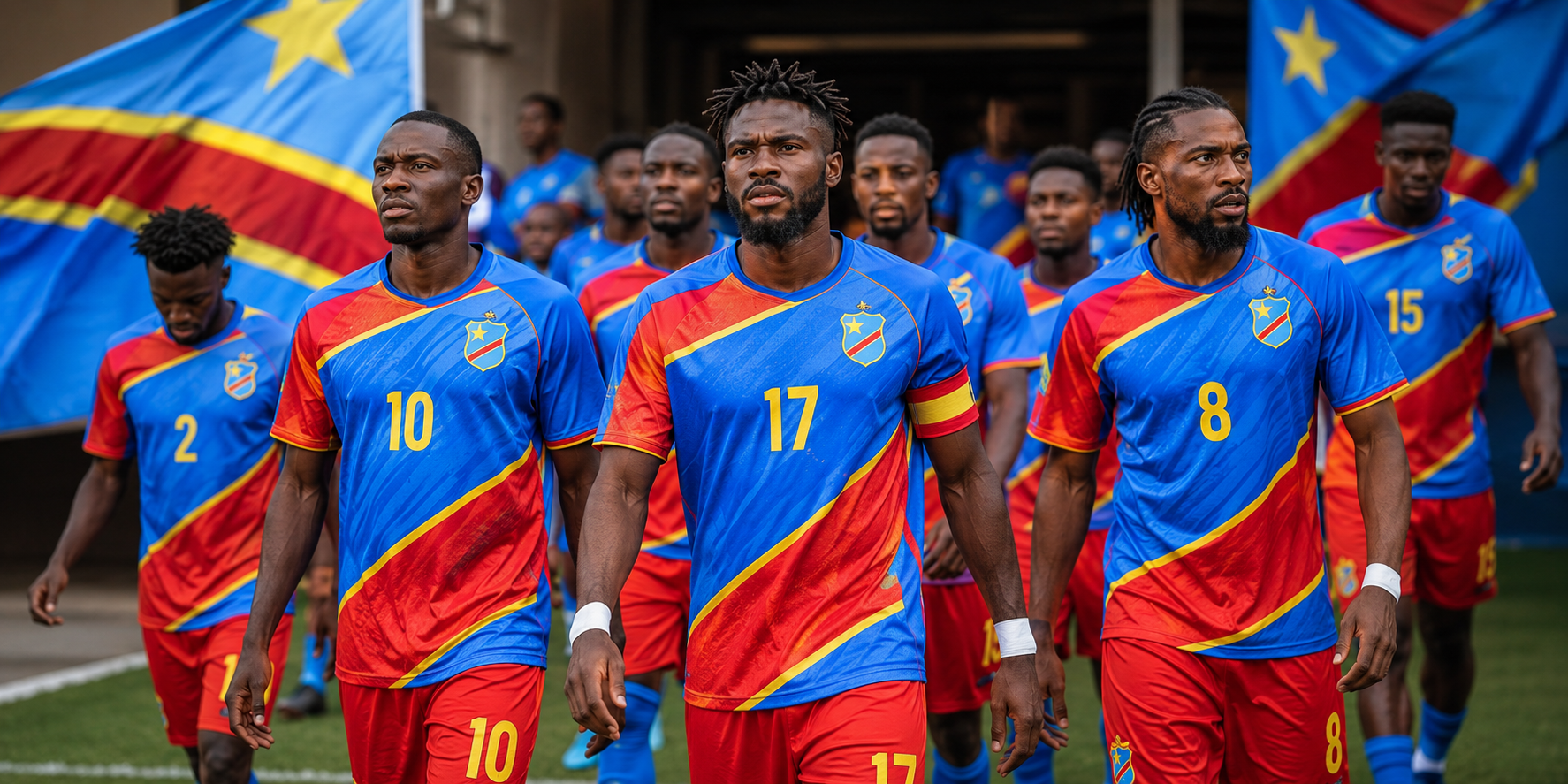
Everything at a glance
- Nickname
- Les Léopards "The Leopards"
- Confederation
- CAF Africa
- FIFA Ranking
- 45th as of early 2026
- Head Coach
- Sébastien Desabre France · in charge since 2022
- Captain
- Chancel Mbemba Centre-back · among nation's most-capped players
- WC Appearances
- 2nd 1974 (as Zaire), 2026
- Best Finish
- Group stage 1974
- Group
- Group K POR · UZB · COL · COD
A landmark return — 52 years in the making.
DR Congo, known as Les Léopards, return to the FIFA World Cup for the first time in 52 years — and only the second time in their history. The nation last appeared at the 1974 finals as Zaire, becoming the first sub-Saharan African nation to qualify for a World Cup. Their 2026 qualification is therefore a landmark moment for Congolese football.
Their road to North America was dramatic. DR Congo finished second behind Senegal in their African qualifying group, then navigated the second round before reaching the inter-confederation play-offs, where they edged Jamaica 1-0 after extra time to seal qualification. French coach Sébastien Desabre, in charge since 2022, has built a fearless, athletic side that punches above its FIFA ranking of 46th.
A fearless, athletic side that punches above its FIFA ranking of 46th.
One of the great feel-good stories of the 2026 World Cup
DR Congo are one of the great feel-good stories of the 2026 World Cup. A 52-year wait, a nation of passionate football lovers, and a squad packed with players plying their trade in Europe’s top leagues make the Leopards a compelling watch. They are arguably the strongest African side outside the established powers, and they qualified the hard way through the play-offs.
There is also genuine quality here. The squad blends Premier League regulars with experienced internationals, all marshalled by a captain who is among the most-capped players in the nation’s history. As tournament dark horses go, they are well worth a look.
The bar, and the dream
DR Congo land in arguably the toughest possible group alongside heavyweight Portugal, dangerous Colombia and unpredictable debutants Uzbekistan. Realistically, advancing from Group K will be extremely difficult — they are likely the third or fourth seeds on paper.
For a nation returning after half a century, simply being competitive and grabbing a memorable result would represent success — but Desabre’s side will quietly believe they can spring a surprise.
A path through
The expanded 48-team format means even third-placed teams can sneak into the round of 32 — a positive result against Colombia or Uzbekistan could put progression within reach.
Desabre’s likely squad
Based on Sébastien Desabre’s announced selection; likely starters marked. Exact final 26 subject to change.
Goalkeepers
3- Lionel Mpasi
- Thimothy Fayulu
- Matthieu Epolo
Defenders
9- Chancel Mbemba
- Aaron Wan-Bissaka
- Alex Tuanzebe
- Arthur Masuaku
- Joris Kayembe
- Steve Kapuadi
- Aaron Tshibola
- Dylan Batubinsika
- Gédéon Kalulu
Midfielders
9- Noah Sadiki
- Samuel Moutoussamy
- Edo Kayembe
- Ngal'ayel Mukau
- Charles Pickel
- Nathanael Mbuku
- Brian Cipenga
- Meschack Elia
- Gael Kakuta
Forwards
5- Theo Bongonda
- Fiston Mayele
- Cedric Bakambu
- Simon Banza
- Yoane Wissa
★ Likely starters. Based on Sébastien Desabre’s announced selection; exact final lineup at Desabre’s discretion.
The names that decide it
Fast, direct and clinical — the squad’s biggest attacking star. Established himself as one of the Premier League’s most dangerous African attackers through his speed and finishing.
Aggressive, athletic, commanding defender — the team’s leader and defensive cornerstone. Among DR Congo’s most-capped players ever, with well over 100 appearances.
Experienced poacher with big-game know-how — a veteran goal threat. Sits just behind DR Congo’s all-time leading scorer with more than 20 international goals.
One of the best one-on-one defensive full-backs in the Premier League — shores up the right flank. Switched his international allegiance to represent DR Congo.
Tenacious, versatile left-sided defender — provides experience and balance. A long-serving Premier League player who has appeared as both left-back and centre-back.
Breakout Player
Fiston Mayele — the Pyramids FC striker has been prolific at African club level and could announce himself on the global stage if given minutes. His movement and finishing make him a candidate to surprise neutrals who have never seen him play.
Most Underrated Player
Charles Pickel — the combative midfielder does the unglamorous work that allows DR Congo’s attackers to shine — breaking up play, covering ground and recycling possession. He rarely makes headlines but is vital to the team’s structure.
Disciplined, athletic and dangerous on the counter
Desabre has forged a disciplined, athletic side that defends in a compact block and threatens on the counter-attack and through pace out wide. Expect organised defending built around Mbemba, energetic midfield pressing, and rapid transitions feeding Wissa and the forwards.
DR Congo are physical, well-drilled and dangerous when they win the ball quickly — a classic counter-attacking outfit happy to absorb pressure against stronger opponents.
By the numbers
Attack: Wissa is genuinely top class, with experienced support in Bakambu. Midfield: Hard-working and physical, if short of elite creativity. Defense: Mbemba and Wan-Bissaka anchor a solid, athletic back line.
Goalkeeping: Capable but unproven at this level. Depth: Decent options, though a step below the group’s elite. Experience: Returning after 52 years; almost no World Cup pedigree. Dangerous dark horses in a brutally tough group.
A long wait — and a chance to write a happier chapter.
DR Congo’s only previous appearance came in 1974 as Zaire, when they made history as the first sub-Saharan African nation at a World Cup. That tournament was a chastening experience: three defeats, including a 9-0 loss to Yugoslavia, and a famous moment when defender Mwepu Ilunga sprinted out of the wall to clear a Brazilian free-kick before it was taken — an act later understood in the context of intense political and financial pressure on the squad.
The 2026 finals therefore mark a long-awaited redemption arc. After 52 years away, the Leopards return as a far more sophisticated, Europe-based outfit determined to write a happier chapter.
-
1974
Historic debut (as Zaire)
The first sub-Saharan African nation at a World Cup — three defeats including a 9-0 loss to Yugoslavia, and the infamous Mwepu Ilunga free-kick moment.
-
2026
The return after 52 years
Back as a far more sophisticated, Europe-based outfit, determined to write a happier chapter.
The grass remembers everything
First sub-Saharan African nation
DR Congo (as Zaire) were the first sub-Saharan African nation to reach a World Cup, in 1974.
The infamous free-kick moment
The 1974 side’s defender Mwepu Ilunga produced one of the World Cup’s most infamous moments by clearing a free-kick before it was taken.
52 years in the making
The 2026 qualification ended a 52-year wait for a return to the World Cup.
Qualified via extra time
They qualified by beating Jamaica 1-0 after extra time in the inter-confederation play-offs.
A French coach
Head coach Sébastien Desabre is French and has worked extensively across African football.
Wan-Bissaka’s allegiance switch
Aaron Wan-Bissaka switched his international allegiance from England’s youth setup to play for DR Congo.
Why Les Léopards?
The nickname “Les Léopards” reflects the big-cat symbolism common to Congolese national sport.
Five reasons to tune in
- A genuine fairytale — a nation returning after 52 years away.
- Yoane Wissa — one of the most exciting attackers you might not know yet.
- Classic underdog counter-attacking football against the group’s giants.
- Passionate, expressive Congolese football culture on the world stage.
- The chance to watch a potential giant-killing in one of the tournament’s toughest groups.
Group-stage exit — but with a spirited campaign and real pride restored.
DR Congo face a brutal group and will likely finish third or fourth. However, a spirited performance and at least one strong result — most plausibly against Uzbekistan or Colombia — is well within reach. In the 48-team format, a third-place finish could even sneak them into the round of 32. Most likely outcome: a competitive, memorable campaign that ends at the group stage, but with real pride restored.
