AT&T Stadium: Dallas’ Cathedral of Spectacle
AT&T Stadium hosts FIFA 2026 in Dallas. Full guide to seats, transit, weather, Texas football culture, semifinal night, and tips for traveling World Cup fans.
Full Match Schedule
9 matches at AT&T Stadium
| Match | Stage | Group | Result / Kickoff | Host City |
|---|---|---|---|---|
| Group Stage | F |
2 – 2
Full Time
|
Dallas United States | |
| Group Stage | L |
4 – 2
Full Time
|
Dallas United States | |
| Group Stage | J |
2 – 0
Full Time
|
Dallas United States | |
| Group Stage | F |
1 – 1
Full Time
|
Dallas United States | |
| Group Stage | J |
1 – 3
Full Time
|
Dallas United States | |
|
Côte d'Ivoire
vs
Norway
|
Round of 32 | — |
1 – 2
Full Time
|
Dallas United States |
|
Australia
vs
Egypt
|
Round of 32 | — |
1 – 1
Full Time
|
Dallas United States |
|
Portugal
vs
Spain
|
Round of 16 | — |
0 – 1
Full Time
|
Dallas United States |
|
France
vs
Spain
|
Semifinal | — |
0 – 2
Full Time
|
Dallas United States |
There’s a moment, the first time you step inside AT&T Stadium, when you stop walking.
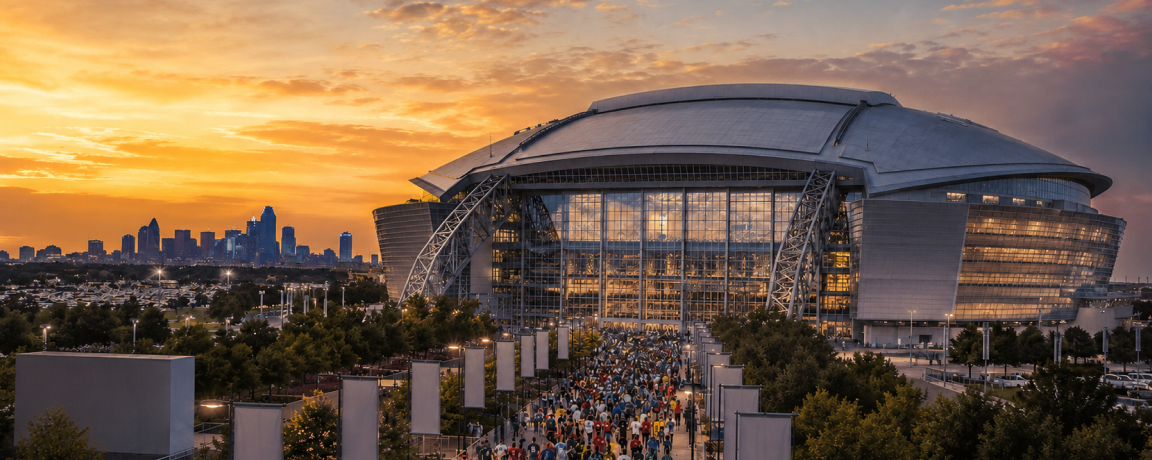
You’re looking up. Everybody does. The roof — when it’s open — is two arched steel ribs holding up a roughly seven-acre canopy of glass and engineered cloth. The video board hanging in the middle of the bowl is the size of a city block standing on its end. The lower seats stretch back from the field in such a tight, vertiginous geometry that your brain takes a second to recalibrate. The whole building is built to make you stand still and feel small.
That’s the trick. AT&T Stadium is designed to overwhelm. Not just impress — overwhelm. And on a hot Dallas evening in the summer of 2026, with one of the World Cup’s two semifinals on the schedule, that overwhelming feeling is going to belong to the people watching the most-anticipated match in the building’s history.
Here’s the full guide for fans heading to North Texas for FIFA 2026.
AT&T Stadium is designed to overwhelm. Not just impress — overwhelm.
Everything at a glance
- Stadium
- AT&T Stadium Arlington, Texas
- City / Region
- Arlington, Texas Dallas/Fort Worth metroplex
- Capacity
- ~80,000 expandable past 100,000
- Opened
- 2009
- Primary tenant
- Cowboys NFL · Dallas
- FIFA 2026
- 9 matches Group stage, knockouts + Semifinal
- Surface
- Natural grass Installed for the tournament
- Location
- Arlington Entertainment District Equidistant from Dallas & Fort Worth
- Roof
- Retractable Closes for heat or storm; opens for clear weather
- Climate
- Texas summer Highs above 95°F; closed roof + AC available
- Transit
- No light rail Most fans drive, rideshare or shuttle
No light rail runs directly to the stadium. Most fans arrive by car, rideshare or shuttle from major hubs.
Built to do what nobody else had done
For decades, the Dallas Cowboys played at Texas Stadium in Irving — the football arena with the famous “hole in the roof so God could watch his team play.” When Texas Stadium was retired, the franchise wanted its replacement to do something nobody else had done. The result, opened in 2009 in Arlington, became known almost immediately by its informal name: Jerry World, after Cowboys owner Jerry Jones.
The original construction reportedly cost over a billion dollars — at the time, the most expensive stadium ever built in North America. Designed by HKS Architects, AT&T Stadium pushed past the conventions of NFL design in nearly every direction. Glass walls behind both end zones can be raised like garage doors. A retractable roof spans the entire bowl. The center-hung video board, when it was installed, was the largest video display ever placed in a stadium and remained the most photographed object in any NFL venue for years.
Since opening, it has hosted Super Bowl XLV, the College Football Playoff National Championship, the Cotton Bowl Classic, multiple WrestleManias, NBA All-Star Games, NCAA men’s Final Four basketball, and a steady calendar of international football friendlies. It has also become a regular hosting venue for major international fixtures — Mexico, Brazil, the United States, and major European clubs have all drawn large crowds here.
For FIFA 2026, the building takes on the most prestigious football assignment in its history: a Semifinal.
Things to do in Dallas
Booked through our partners — we may earn a commission at no extra cost to you.
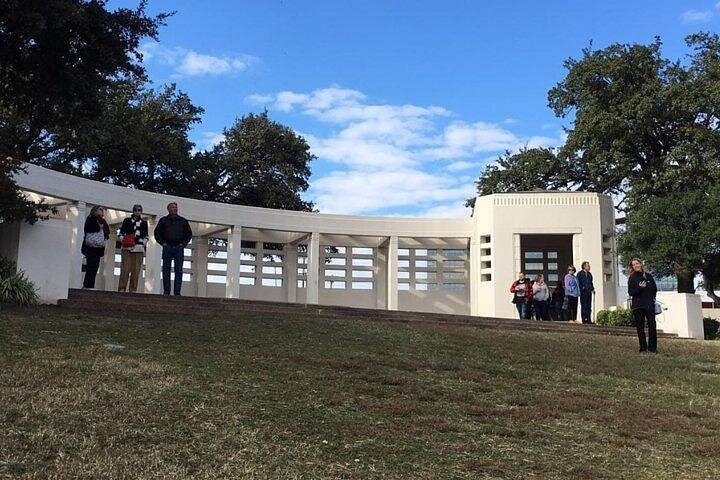
JFK Assassination and Museum Tour with Lee Harvey Oswald Rooming House
View product

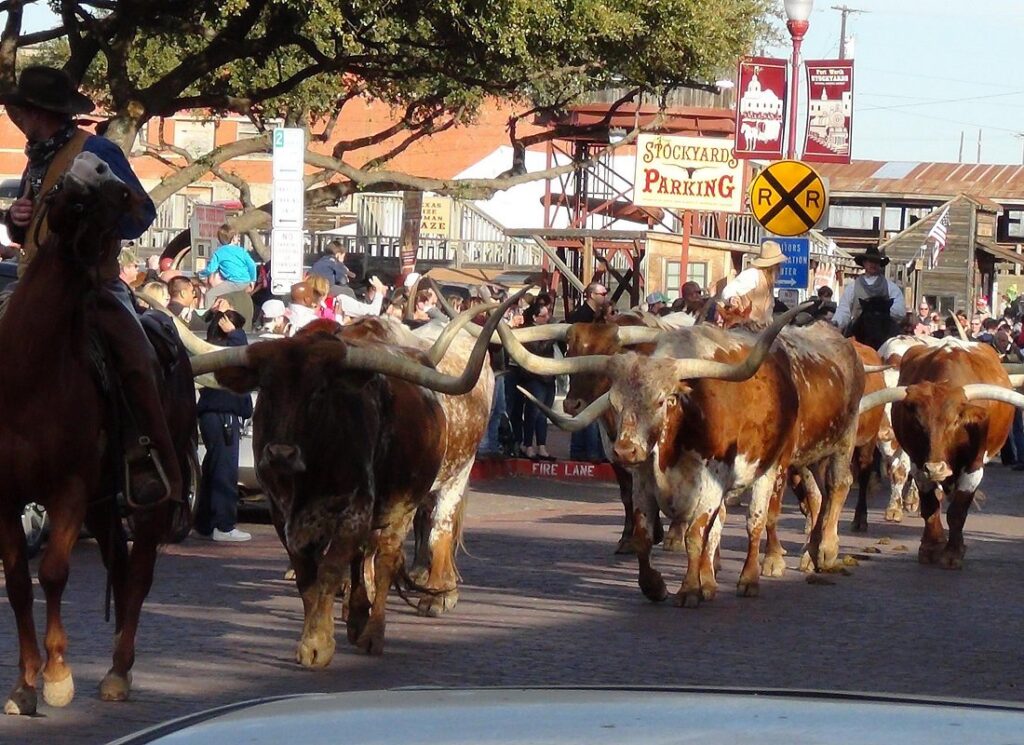
Fort Worth Historical Tour from Dallas: Stockyards & Cowboy Heritage
View product
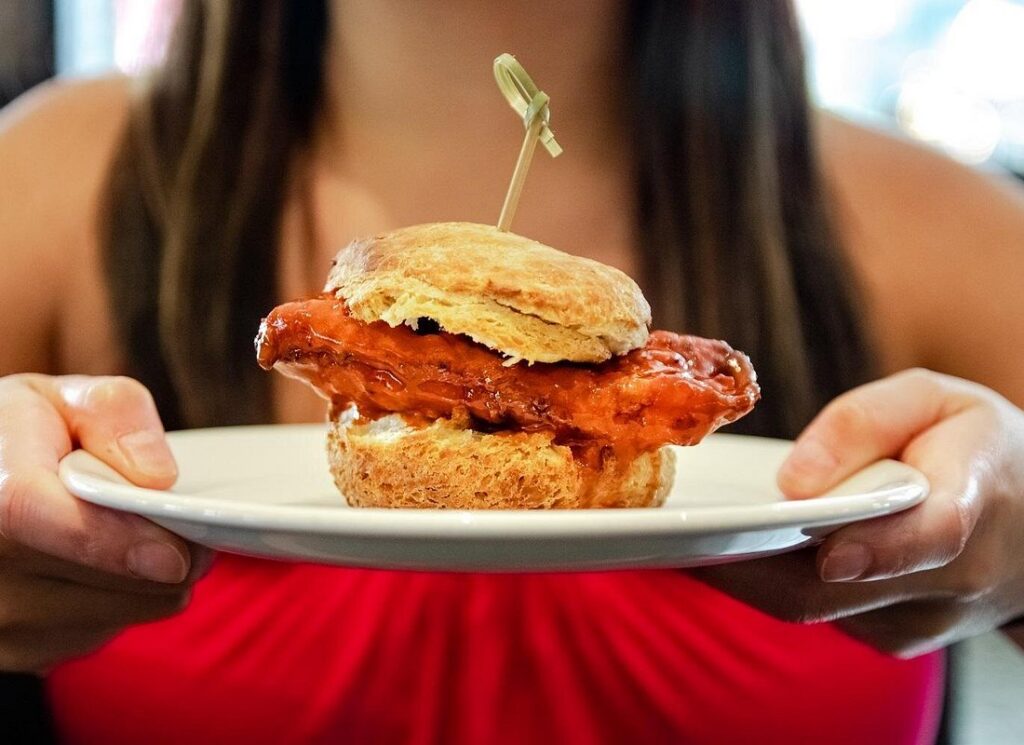
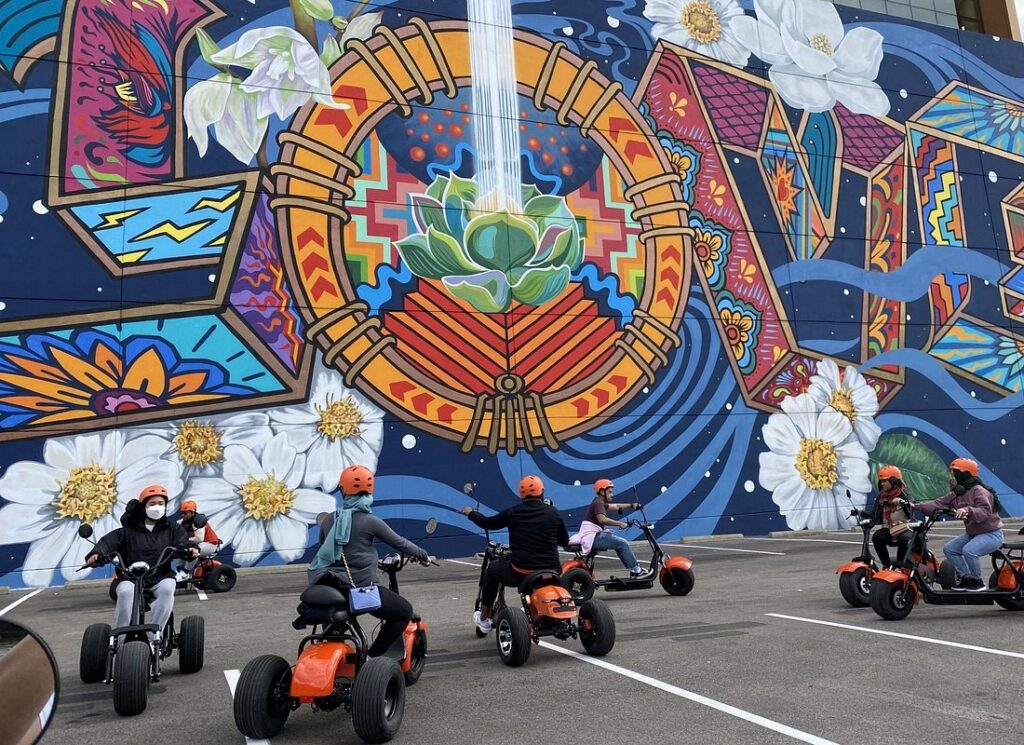

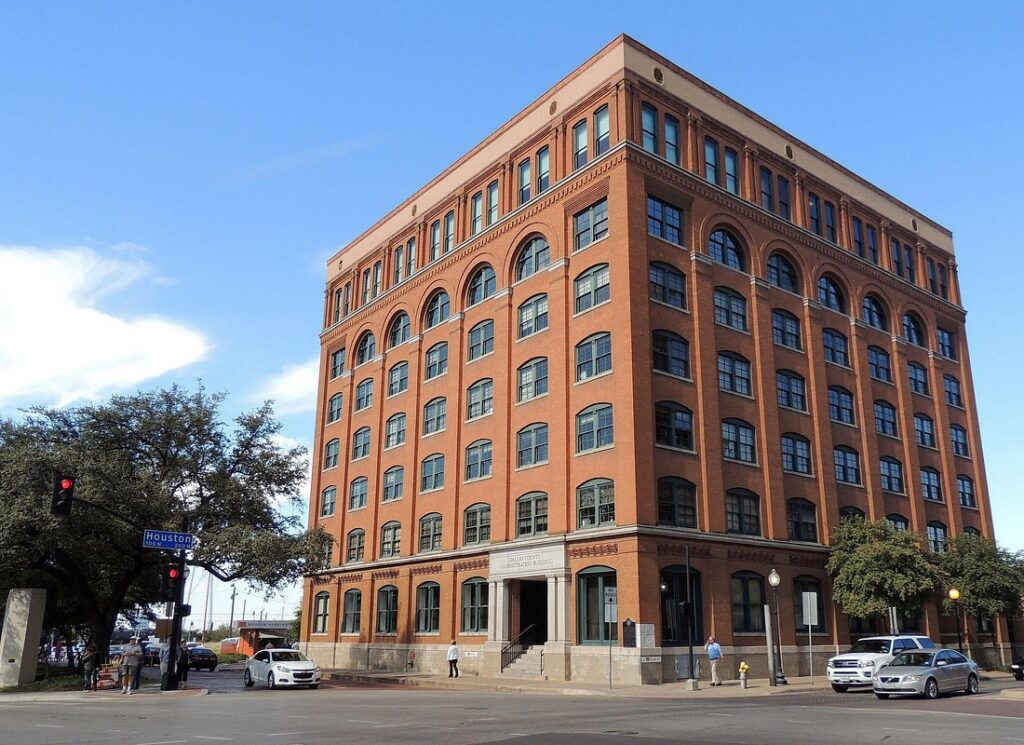
Scale, climate control and theater
Three things define the experience: scale, climate control and theater.
- Scale. The bowl is enormous. Lower-seating geometry is steeper than at most American stadiums, which makes the field feel closer than capacity would suggest. The upper deck reaches into territory that looks impossible from the field. Visiting players have famously commented that the building feels bigger than its listed capacity. It is.
- Climate control. Dallas in June and July is hot. The retractable roof, combined with one of the largest stadium air-conditioning systems in American sports, lets the venue host afternoon matches without subjecting players or fans to ambient temperatures above 95°F. Whether the roof is open or closed for each fixture will depend on weather and FIFA preference, but the option exists.
- Theater. This is the most aggressively theatrical stadium in North America. The video board is its own attraction — fans buy seats specifically to be near it. The end-zone glass doors can be opened to let outside light, sound and the Texas skyline into the bowl. Multiple cantilevered party decks and unusual seating concepts (including standing-room platforms in the corners) create sightlines that feel more like an arena rock concert than a sports venue. Everything is bigger, brighter and louder than convention suggests it should be.
- Freestanding plaza design — the building sits within a large surrounding plaza, allowing for multiple exterior fan-festival staging areas.
- Processional pedestrian bridges across the surrounding parking lots, designed for matchday flow.
- The Cowboys Club and pro shops are tourist destinations in their own right.
You don’t put matches in Texas without AT&T Stadium
The capacity
One of the largest in the 2026 tournament.
The roof
The most reliable climate solution in the entire host roster for matches scheduled in the heat of midsummer.
Mature hospitality infrastructure
Having absorbed major events for over a decade.
The football culture
The Dallas/Fort Worth metroplex is one of the fastest-growing population centers in the United States, with a deeply established football culture rooted in the area’s enormous Latino population and several million expat fans of European and South American clubs.
AT&T Stadium’s nine-match assignment — including group-stage games, knockout fixtures, and a Semifinal — reflects FIFA’s confidence in the building. The Semifinal night will be one of the loudest single events in Texas sports history.
Consistently massive crowds
In American football terms, AT&T Stadium has staged Super Bowl XLV, the Cowboys’ return to relevance under multiple coaching regimes, and several Cotton Bowl classics. WrestleMania has set attendance records here. Concerts from some of the largest names in country, hip-hop and pop have made the venue a regular tour stop.
In football specifically, AT&T Stadium has consistently drawn massive crowds.
- Mexico’s national team has played here multiple times, generally to atmospheres that rival their home matches at the Estadio Azteca.
- The CONCACAF Gold Cup, CONCACAF Champions Cup-affiliated friendlies, and major European club preseason tours have all stopped through.
- Crowds for Mexico–USA and Mexico-vs.-Europe friendlies have frequently been among the largest international football audiences in the United States in any given year.
The 2026 Semifinal will join — and arguably surpass — all of it.
Football country wearing a cowboy hat
This is one of the most underestimated football cities in the United States.
The Dallas/Fort Worth metroplex has more than seven million residents, a deep Latino population, FC Dallas in MLS, multiple second-tier and women’s professional teams, and a youth football pipeline that has supplied U.S. national team players for decades. Plenty of Liga MX, Premier League, La Liga and Serie A jerseys walk through Texas malls on any given Saturday. Bars from Oak Cliff to Plano to Fort Worth’s South Main District host early-morning Champions League viewing parties.
For international fans, three cultural patterns matter: Tex-Mex food culture intersects with football culture — Sunday matches and weekend brunch tacos are practically a single tradition. The metroplex is sprawling — “Going to a match” can mean a 45-minute drive even from inside the metro area. Plan accordingly. The Latino football fan base is one of the largest in the country — expect Mexico-related fixtures to feel like home games, and Concacaf and Conmebol nations to bring sizeable supporter contingents.
This is football country wearing a cowboy hat. By the time the 2026 tournament arrives, the hat will be on backwards and the scarf will be wrapped around the neck.
By the time the 2026 tournament arrives, the hat will be on backwards and the scarf will be wrapped around the neck.
What to expect
-
Morning in Dallas or Fort Worth
Both cities have walkable urban districts that work well for breakfast and pre-match crowd warmth.
-
Travel to Arlington
Most fans drive or rideshare. There is no light rail directly to the stadium. Allow 30 minutes from Dallas and 30 minutes from Fort Worth in standard traffic, longer on matchday.
-
Arlington Entertainment District
Texas Live! plazas, the brewery patios around Globe Life Field, and the AT&T Stadium plazas all serve as pre-match social spaces.
-
Tailgating
This is Texas. Tailgating is taken seriously. Expect serious smokers, serious flags and an unspoken matchday etiquette of generosity.
-
Entry
Clear-bag policy. Security is professional and well-rehearsed.
-
Inside the bowl
First-time visitors should look up immediately. The video board, the roof structure and the end-zone glass walls are part of the experience.
-
Post-match
Pre-arrange your departure. The single biggest stress on a Texas matchday is leaving the parking complex.
Where to sit
Lower bowl behind the goals
Supporter sections cluster here. Sound bounces hardest in this section when the roof is closed.
Mid-tier sideline
The bowl geometry gives you a long, clean look across the pitch.
Upper-deck corners & standing-room platforms
The video board, the roof structure and the field all fit in one frame.
Mid-bowl, off the noise
Away from the most vocal supporter sections. Concessions are nearby, exits are simpler.
Upper-deck end zone
Watch resale platforms in the weeks leading up to matches.
Cowboys Club & field-level clubs
The most-coveted hospitality in the building.
Behind the goal line
A unique AT&T Stadium feature. Cheaper than seated tickets, with views right behind the goal line.
A specific tip
Seats angled toward the video board offer one of the best in-stadium replay experiences in the world. Don’t avoid them.
Getting here
- From DFW International Airport
- Roughly 20 minutes by car outside rush hour. Rideshare is the most common option for fans.
- From Dallas Love Field (DAL)
- Roughly 30 minutes by car.
- From Downtown Dallas
- About 25–35 minutes by car. Longer on matchdays.
- From Downtown Fort Worth
- About 25–30 minutes by car.
- Parking
- Pre-paid parking lots in the Entertainment District are essential. Walk-up parking is unrealistic on matchday.
- Rideshare
- Designated pickup zones are well organized. Surge pricing post-match is substantial. Pre-booking helps.
- Light rail
- DART rail connects Dallas to Plano and Irving but does not run directly to AT&T Stadium. The Trinity Railway Express connects Dallas and Fort Worth. For World Cup matches, fans should use TRE to CentrePort Station, then transfer to official shuttle or bus service for the final leg to Dallas Stadium.
- Buses and shuttles
- Various matchday shuttle services run between hotels and the Entertainment District. Check official FIFA and city resources closer to the tournament.
- Walking and biking
- Within the Entertainment District, walking is practical. From outside the district, walking is not realistic in summer heat.
- Accessibility
- Step-free routes, accessible parking and seating zones available throughout the stadium. Fans should check FIFA, Dallas Stadium and local transport accessibility guidance before matchday.
The blunt advice
Rideshare or pre-paid parking. Don’t try to “wing it” in Arlington.
Three reasonable choices
Downtown Dallas
Bigger nightlife, more hotel options, stronger urban energy. Walkable to the West End, Deep Ellum and the Arts District. Matchday commute around 30 minutes.
Fort Worth
Sundance Square and the Stockyards district give you a quintessentially Texas experience — cowboy culture, music venues and a quieter pace than Dallas. Matchday commute roughly 30 minutes.
Arlington
Hotel inventory has grown significantly with the Entertainment District. Less nightlife than Dallas or Fort Worth, but the trade-off is convenience.
Plano, Frisco, McKinney
Northern suburbs with hotel availability and modern shopping districts. Good for fans renting a car who want quieter evenings.
Las Colinas / Irving
Corporate hotel availability and reasonable access to the stadium.
Deep Ellum
Dallas’s music and nightlife district. Excellent for fans who want a live-music-heavy World Cup experience.
If you’re staying for multiple matches, splitting nights between Dallas and Fort Worth is a popular itinerary.
One of the great unsung pleasures of a Dallas World Cup visit
Food is one of the great unsung pleasures of a Dallas World Cup visit.
- Tex-Mex — different from Mexican food and proudly so. Cheese enchiladas, queso, beef fajitas, breakfast tacos. Multi-generational family restaurants across the metroplex.
- Barbecue — brisket especially. Texas brisket is a cultural artifact. Plan at least one long lunch at a respected pit. Some of the best barbecue restaurants in the country are within an hour of the stadium.
- Real Mexican cuisine — Oak Cliff in Dallas has multiple neighborhoods of outstanding regional Mexican food: Pueblan, Oaxacan, Guerreran, Michoacan.
- Steakhouses — Texas takes them seriously.
- Soul food and Cajun crossover cuisine — strong in South Dallas.
- Vietnamese food — Garland and parts of Arlington.
- Halal and Middle Eastern — Richardson and parts of Plano.
- Whataburger — order at least once. Late-night, after a match.
- Coffee — a growing third-wave scene in Bishop Arts, Lower Greenville, Magnolia Avenue in Fort Worth, and across Frisco.
Bars & viewing parties
Deep Ellum, Lower Greenville and Bishop Arts in Dallas; Magnolia Avenue and the Near Southside in Fort Worth; Texas Live! in Arlington. Many soccer-specific bars run early-morning international matches throughout the year and will be in full swing during the World Cup.
Texas summer is no joke
35–38°C. Heat waves push past 105°F (40°C) every few years.
Less coastal humidity than Houston, but still uncomfortable in direct sun.
Possible afternoon thunderstorms, particularly in June. Storms can be intense but short.
What matters more than air temperature. Regularly above 100°F (38°C). Hydrate aggressively.
When the roof is closed, the building is comfortably cool. When open, the bowl heats up rapidly in direct sun.
Practical kit
- One factory-sealed disposable soft plastic water bottle, up to 20 oz / 590 ml, if allowed under current FIFA venue rules, plus an electrolyte plan.
- Light, breathable clothing
- High-SPF sunscreen
- Hat and sunglasses
- A light layer for inside the air-conditioned bowl, which can feel chilly relative to the outside heat
Bragging rights
The video board that punts hit
The video board famously hangs lower than NFL punters initially expected. During preseason tests, kicks struck the board on multiple occasions. The board has since been adjusted, but the legend persists.
The most expensive stadium of its time
The full construction cost has been reported at well over a billion dollars, making the venue one of the most expensive stadiums ever built at the time of its opening.
Five-story glass walls
The two enormous end-zone glass walls are five stories tall and can be opened by giant retractable doors.
A permanent art collection
AT&T Stadium has a large permanent contemporary art collection installed throughout the concourses, including major commissioned pieces.
The busiest tailgate ecosystem
The stadium’s surrounding plazas host one of the busiest tailgate ecosystems in American sports.
Millions of LED lamps
The center-hung video board uses millions of LED lamps and is one of the most-photographed objects inside any sports facility in the United States.
Originally Cowboys Stadium
The venue was originally named Cowboys Stadium before AT&T’s naming rights acquisition.
The building is mostly underground.
There’s an enormous architectural reason AT&T Stadium feels the way it does, and you can’t really see it from inside. The bowl is partially excavated below grade, with the iconic glass walls and arching roof making the structure look enormous from the outside while concealing how much of the bowl is recessed. This is part of why the lower bowl has such steep sightlines — they’re tilted aggressively because the construction allowed for it. Look at the stadium from across the parking lot and pay attention to how low the doors sit relative to the ground around them. Once you’ve seen it, you can’t unsee it.
Frame the trip
- Exterior of the stadium from across the entertainment district. Wide-angle, late afternoon, the building catching golden light.
- Inside the bowl with the video board glowing during pregame. Wide-angle from the lower seats.
- Looking up at the retractable roof from midfield. If you can get to the field level during a tour, this is the iconic shot.
- Fort Worth Stockyards. Cowboy hats, longhorns and a World Cup scarf — a visual collision Texas does extremely well.
- Klyde Warren Park or the Margaret Hunt Hill Bridge with the Dallas skyline in the background.
- Six Flags or the Globe Life Field plaza with the AT&T Stadium silhouette behind you.
Theatrical, generous, occasionally loud as a thunderclap
The atmosphere at AT&T Stadium has a particular character: theatrical, generous, occasionally loud as a thunderclap, and shaped by a deeply confident Texas-football identity that translates well to global football’s spectacle.
When the bowl is full for a major international fixture, the noise behavior is unusual. With the roof closed, sound reflects between the roof structure and the upper bowl in a way that builds intensity through the second half. With the roof open, sound disperses into the Texas sky and the chant patterns are different.
For 2026, the Latino fan presence will be enormous. Mexican-affiliated fixtures here have historically drawn very large crowds and strong supporter turnout. Expect drum sections, large flags, organized chants and full-bowl coordination. Expect the same from CONCACAF and Conmebol nations that draw Texas-based supporter contingents.
The retractable roof is a sustainability tool
AT&T Stadium has invested in stadium-scale energy efficiency, including LED lighting throughout the venue, optimized HVAC controls under the closed roof, and recycling programs across concessions. The retractable roof itself is a sustainability tool — the ability to keep the bowl shaded and air-conditioned reduces heat exposure for fans and players, an increasingly important consideration in Texas summers.
On technology: the stadium’s network infrastructure has been continuously upgraded since opening, with high-density Wi-Fi, mobile-app ticketing and concessions, and integrated AR and replay experiences for premium-seat holders. Expect a heavy technology layer for FIFA 2026 broadcasts and fan engagement.
Cumulative, not transformative
The Arlington Entertainment District has spent the past two decades reorganizing around AT&T Stadium and Globe Life Field. The 2026 World Cup will further entrench this corridor as one of the most consequential urban sports destinations in North America. Hotel inventory in Arlington will continue to grow. Transit upgrades — including a long-discussed people-mover system — may finally find the political momentum the tournament requires.
For football culture across North Texas, the legacy is likely to be cumulative rather than transformative. MLS, USL, NWSL and Liga MX viewership in the metro have all been climbing for years. The World Cup will accelerate, not start, the trend.
Look up
If you’ve never been inside AT&T Stadium, prepare for the building to do most of the talking on your first visit. Look up. Walk slow. Find your seat early. Pay attention to the way the light shifts when the roof opens. Eat a brisket sandwich. Don’t apologize to anybody about ordering Tex-Mex when “real” Mexican is supposedly nearby.
A World Cup Semifinal night is going to make this building feel even bigger than it is. By the time the players walk out, with the roof open or closed, with the video board glowing and ninety-thousand voices in the bowl, you’ll understand why FIFA chose this stadium to host one of the two penultimate matches of its first 48-team tournament.
You’ll look up. You’ll stand still. You won’t forget it.
